 Kinky Thinking
On this page
The position someone’s tied in changes everything: how helpless they feel, what their partner can reach, and how long they can comfortably stay there. These ten bondage positions go from simple and supported to more intense, each with what it’s good for and what to watch.
In each diagram, cuffs are shown in dark grey and numbered markers point out the safety details. You don’t need rope for any of them: padded cuffs, an under-bed restraint kit or a spreader bar work for all of them. If you do want to use rope, read how to tie someone up first.
Before you tie anyone
- Agree it first: what’s happening, how long for, and a safeword plus a hand signal (dropping something held, or three taps), in case speaking gets hard.
- Two fingers’ room under every cuff or tie.
- Safety scissors within arm’s reach, and keys in the room if anything locks.
- Check hands and feet every few minutes for cold, tingling, numbness or color change.
- Never leave a tied partner alone, not even for a moment.
1. Spread eagle
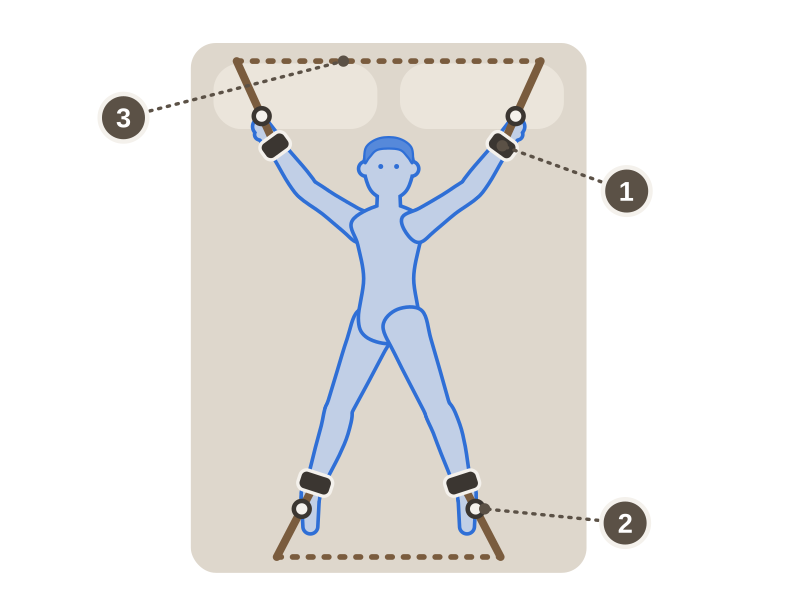
Lying on the back with each wrist and ankle cuffed toward a corner of the bed. It’s the classic bondage position: completely open, completely on display, and the restrained partner is fully supported by the bed. Keep the arms out to the sides rather than stretched hard overhead, and don’t pull the legs wider than feels good.
Good for: teasing, oral, sensation play, and long, slow scenes.
2. Arms above the head
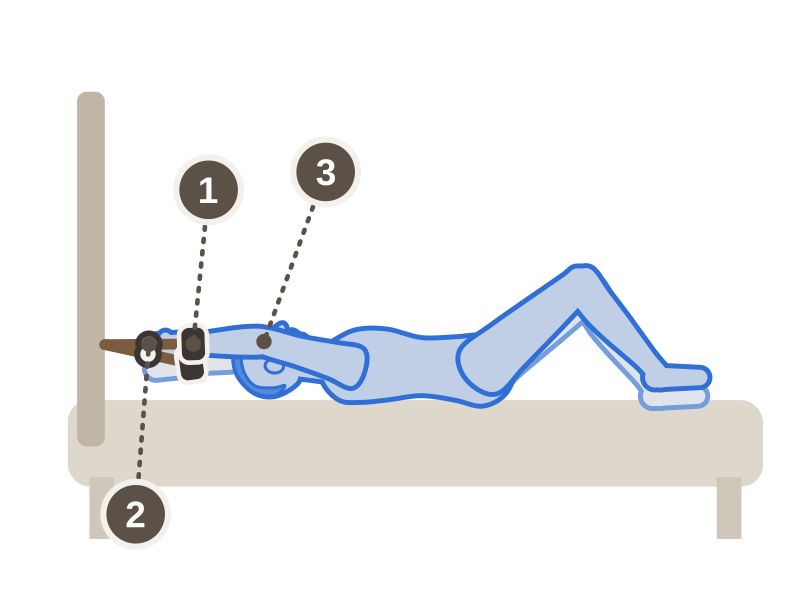
Lying on the back, wrists cuffed together and clipped to the headboard. Legs stay free, so it’s easy to combine with sex, oral or a toy. Raised arms lose circulation faster than arms at your sides, so keep the elbows slightly bent, check the hands often, and lower the arms every 10 to 15 minutes.
Good for: beginners, and pairing with almost anything else.
3. Spreader bar
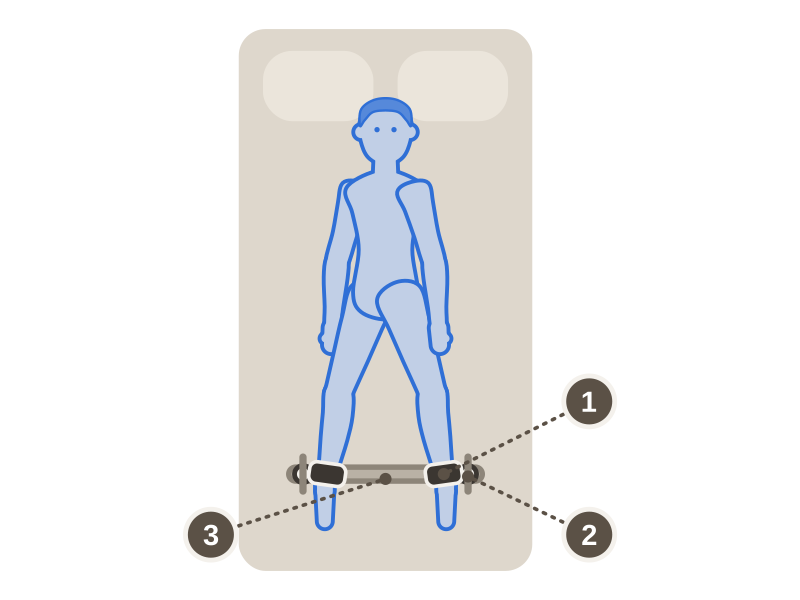
A rigid bar with a cuff at each end holds the ankles (or wrists) apart. Lying on the back, it keeps the legs open without needing anything fixed to the bed. Only ever use one lying down, sitting or kneeling: standing in a spreader bar is a fall waiting to happen. See spreader bar for the details.
Good for: a feeling of being held open, oral, and combining with wrist cuffs.
4. Kneeling, wrists behind the back
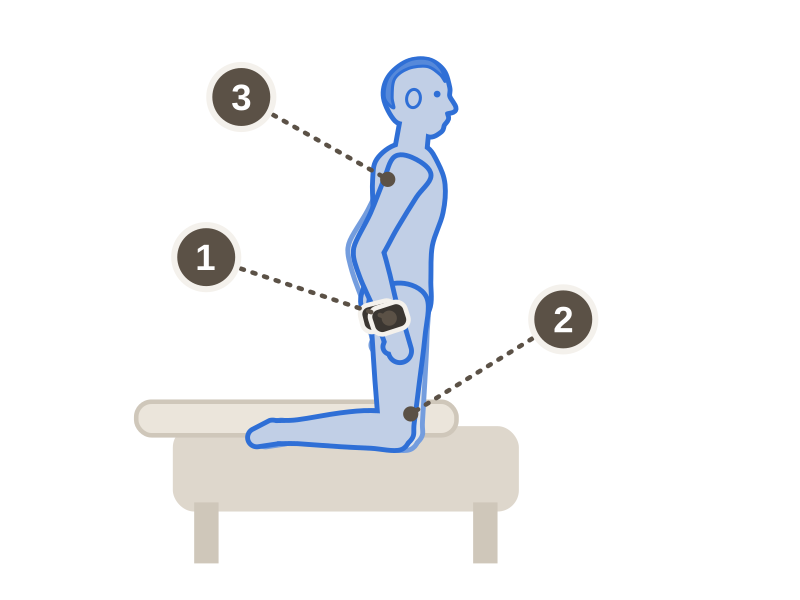
Kneeling upright on something soft, wrists cuffed behind the back. It’s a deeply submissive position, beautiful for D/s scenes, worship and service. Keep the wrists resting low against the lower back, never pulled upward, and keep the knees padded. Have them sit back on their heels if they wobble.
Good for: power exchange, oral, and short, intense moments.
5. Frog tie
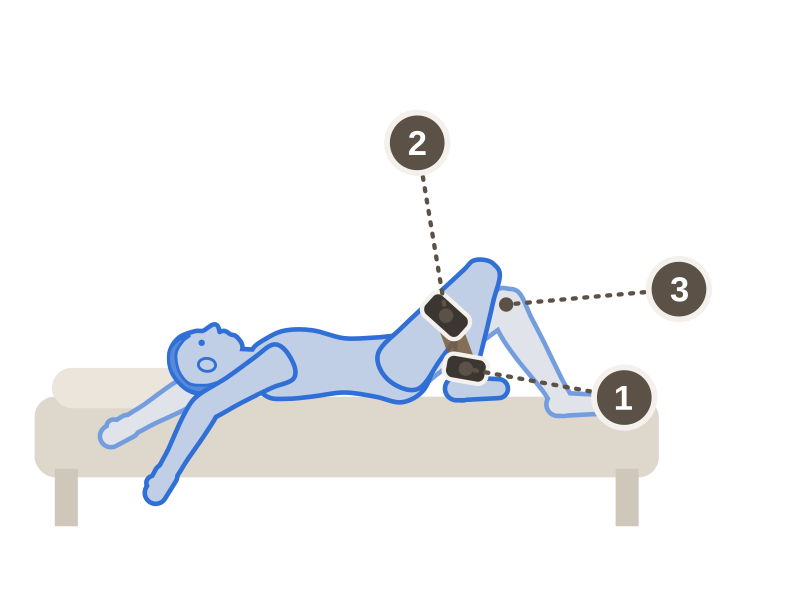
Each ankle is strapped to its own thigh, so the knees stay bent and the legs can’t straighten. Lying on the back, it leaves the restrained partner open and unable to close or stretch out their legs. It’s easiest with thigh-and-ankle cuffs. It suits flexible people; anyone with knee trouble should skip it, and nobody should stay in it long.
Good for: a strong feeling of being held open, without anything fixed to the bed.
6. Tied to a chair
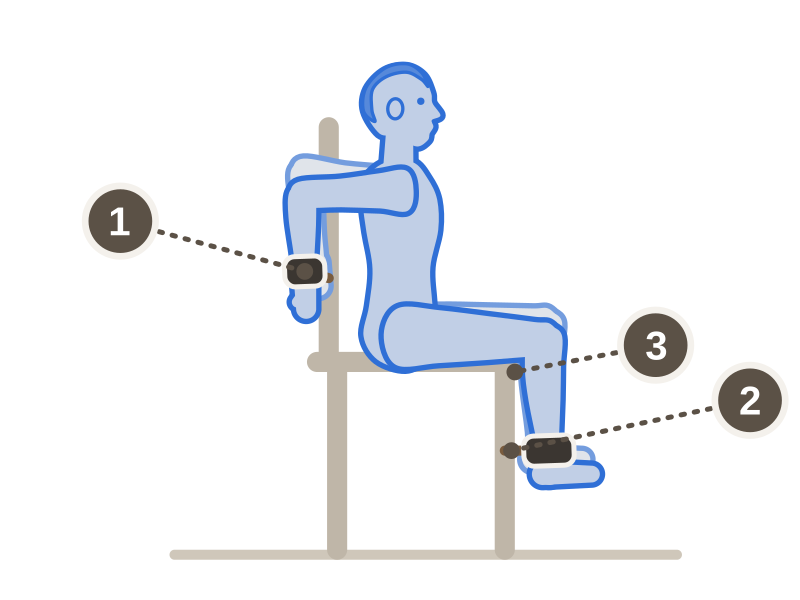
Sitting on a sturdy chair, wrists cuffed behind the chair back, ankles to the front legs. It’s a favorite for interrogation-style roleplay (both adults), lap dances the restrained person can’t touch, and tease and denial. Use a solid, armless chair with no wheels, on a rug so it can’t slide, and stay close in case it tips.
Good for: roleplay, teasing, and being made to watch.
7. Bent over the bed
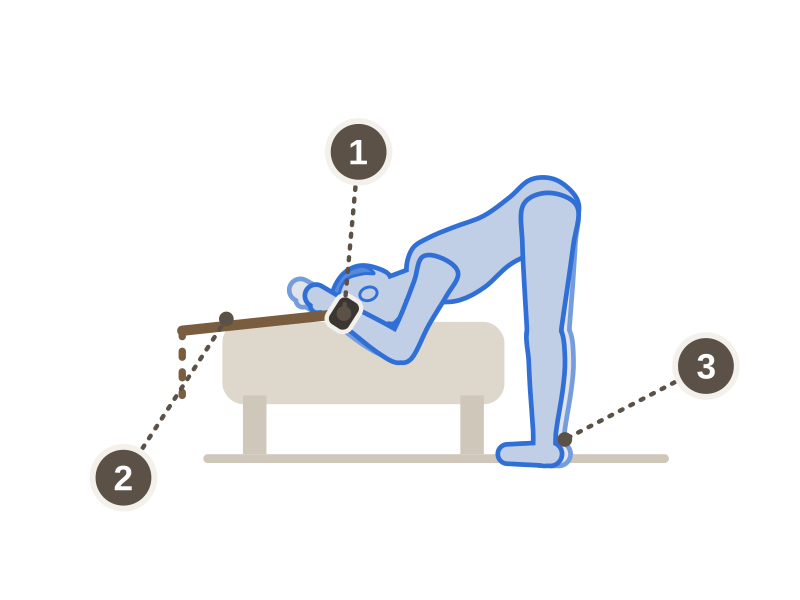
Standing at the side of the bed and bending forward over it, forearms on the mattress, wrists cuffed to a strap that runs across the bed. The bed takes the upper body’s weight, so it’s much safer than standing restraint, and it’s perfect for spanking or sex from behind. Leave the legs free so they can always take their weight.
Good for: impact play, sex from behind, and a “presented” feel.
8. The safer hogtie
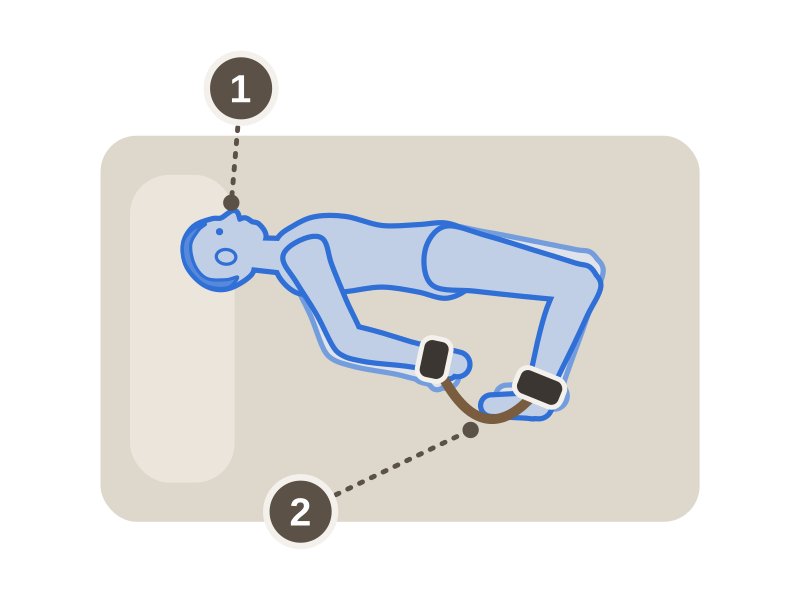
Wrists cuffed behind, ankles cuffed, and a long, slack strap between them, lying on the side rather than face down. The classic tight, face-down, arched hogtie can restrict breathing and strain the shoulders, so it’s one for experienced players only. Our hogtie guide explains the difference. Keep it short and stay right beside them.
Good for: a feeling of total helplessness, for short periods.
9. Face down, wrists to the headboard
Lying face down with a pillow under the hips, wrists cuffed and clipped to the headboard. Turn the head to the side and keep the face clear of pillows so breathing is never blocked. Great for massage, spanking and teasing the back of the body.
Good for: impact, massage, and longer, relaxed scenes.
10. Wrists tied in front
The simplest of all: wrists cuffed, or tied with a scarf in a loose bow, in front of the body, either sitting, kneeling or lying down. It’s symbolic more than restrictive, which makes it perfect for a first time. Our bondage ideas has more gentle ways to start.
Good for: first-timers, and adding a little restraint to anything.
Positions to avoid
- Anything around the neck. Collars are for decoration, never for tying to anything.
- Standing with arms tied overhead, or ankles tied together. If someone faints or stumbles, they can’t catch themselves.
- Arms tied behind and pulled upward (strappado). It can injure the shoulders quickly.
- Tight, face-down hogties that arch the back or press the chest into the bed.
- Suspension of any kind without proper hands-on training. See suspension bondage.
Stop if…
- There’s numbness, tingling, cold, or pale or blue-ish skin in the hands or feet. Release first, talk second.
- There’s pain in a joint (shoulder, hip, knee) rather than a stretch.
- Breathing seems harder, or they feel faint, sick or panicky.
- They go quiet, seem far away, or use the safeword or signal.
Afterwards
Release slowly, rub the wrists and ankles to bring the warmth back, and help them move and stretch before standing. Then make time for aftercare: water, a blanket, a cuddle and a chat about what you both liked. For more ideas, see our types of bondage, BDSM games, or the list of kinks.
Try it together
Frequently asked questions
What is the best bondage position for beginners?
Lying on your back with your wrists cuffed to the headboard or to under-bed restraints. You're fully supported by the bed, it's easy to check on you and quick to release, and it leaves your partner free to touch, tease or go down on you.
What is the spread eagle bondage position?
Lying on your back with each wrist and ankle restrained toward a corner of the bed, so you can't close your arms or legs. It's a classic. Keep the arms below shoulder height or the elbows soft, and don't pull the legs wider than is comfortable.
What bondage positions should you avoid?
Anything around the neck; standing positions with the arms tied above the head or ankles tied together, where a faint or stumble means a fall; arms tied behind and pulled upward (strappado); tight hogties that arch the back; and suspension without proper training.
How long can someone stay in a bondage position?
Start with a few minutes and check in often. Change position or release at least every 15 to 20 minutes, sooner for raised arms or a hogtie, and straight away for numbness, tingling, cold, color change, or pain in a joint.
Do you need rope for bondage positions?
No. Padded cuffs, under-bed restraints, a spreader bar or even a soft scarf tied in a loose bow work for every position here. Rope takes practice to tie safely; our guide on how to tie someone up covers the basics.