 Kinky Thinking
On this page
Bondage is one of the most popular kinks there is, and one of the easiest to start: you need nothing more than your hands. Being held still can feel thrilling, safe or deliciously helpless; holding someone still can feel powerful and intimate. Here are 25 bondage ideas for couples, from no-gear holds to beginner rope, with the safety checks built in.
If you’d like the background first, our overview of the types of bondage explains what each kind is and how they differ. This page is about what to actually do.
Before you start
A few rules make every idea below safer:
- Agree a safeword, plus a non-verbal signal (dropping a held object, or three taps) in case talking gets hard.
- Two fingers underneath. Anything around a wrist or ankle should be loose enough for two fingers to slide under.
- Check circulation every few minutes. Hands and feet should stay warm, normal in color, and full of feeling. Release at the first numbness or tingling.
- Safety shears within reach. Blunt-tipped shears cut through rope or fabric in seconds. Keep them next to you, not in a drawer.
- Never leave someone tied up alone, and nothing ever goes around the neck.
Talk through what’s on the table first. Our scene negotiation checklist covers it in a few minutes.
No gear needed
- Hold their wrists down. Pin your partner’s wrists to the bed with one hand while you kiss them. The simplest restraint there is.
- “Don’t move.” No restraint at all: just an order to keep their hands above their head (or by their sides) while you tease. Moving means starting again.
- Hands behind your back. Your partner keeps their own hands clasped behind them while you take charge. Holding still by choice is its own kind of bondage.
- Body weight. Lie over your partner, pinning them gently with your weight, and take your time. Keep your weight off their chest so breathing stays easy.
- Hold them from behind. Wrap your arms around your partner’s arms and torso while you kiss their neck. Cosy and controlling at once.
Soft cuffs and restraints
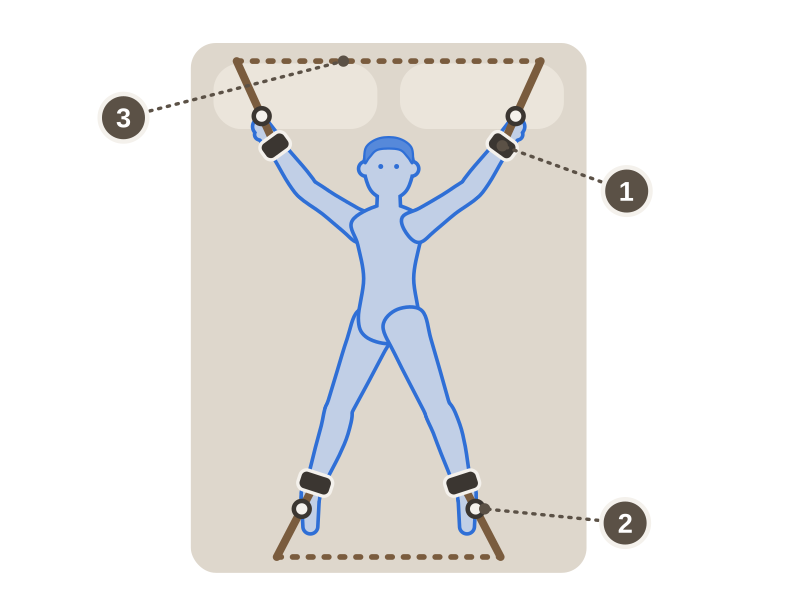
The easiest way to try real restraint: padded or Velcro cuffs need no technique and come off in a second.
- Wrists in front. Cuff wrists together in front of the body, so balance and shoulders stay comfortable. A great first try.
- Cuffed to the bed. Fasten wrists (or wrists and ankles) to the bed frame, with enough slack that arms rest comfortably. Under-bed straps make this easy on any bed; see our restraint picks.
- Spread out. Wrists and ankles each fastened toward a corner. Keep the arms bent slightly rather than fully stretched, and check shoulders often.
- Wrists behind the back. More intense, and harder on the shoulders, so keep it short and check in.
- A scarf, tied loosely. A wide, soft scarf or dressing-gown belt works for a first try. Use a simple bow, never a knot that tightens when pulled.
Want everything in one box? Our guide to the best bondage kits explains what to look for in a starter set.
Bondage plus one other thing
Restraint makes almost everything else feel more intense. Pair it with one other kink you both like:
- Bondage and a blindfold. Tied and unable to see, every touch is a surprise. See our guide to sensory deprivation.
- Tied and teased. Kiss and touch everywhere except where they most want it, while they can’t reach for you.
- Ice and warm breath. Run an ice cube along a restrained partner’s skin, then warm the spot with your breath. (Temperature play)
- Cuffed for a spanking. Wrists held, then a slow, building spanking on the bottom and thighs, checking in between sets.
- Edging while tied. Bring them close to the edge, stop, and repeat, while they can’t do a thing about it. (Edging)
- Tied and worshipped. The opposite of rough: slow, adoring kisses from head to toe while they’re held still.
Bondage games
- The guessing game. Restrained and blindfolded, they guess what’s touching them: a feather, a fingertip, something cold.
- Earn your freedom. Each wrist comes free only when they ask nicely (or complete a small task).
- Count to sixty. They must stay completely still for a slow count of 60 while you tease. Any movement, and the count restarts.
- The struggle. Loosely tied wrists, and a challenge to wriggle free in two minutes while you distract them. Keep it playful, and stop if anything twists or hurts.
Beginner rope
Rope is beautiful and intimate, but it’s a skill. Learn one tie at a time, practise fully clothed, and keep shears in reach. Our guides to what shibari is, how to be a rigger and how to be a rope bottom go deeper.
- A single-column tie around both wrists. The first tie most people learn: a loop around the wrists that can’t tighten. Practice it until it’s easy. Our guide on how to tie someone up explains it step by step, and bondage positions shows ten ways to tie someone, with diagrams.
- Wrists to the bed. Use that tie, then fix the tail to the bed frame (not to headboard slats, which can snap).
- Rope as decoration. A simple rope harness over clothes, just for the look and feel of being wrapped. Our rope picks suggest beginner-friendly rope.
- Tying as foreplay. Make the tying the scene: slow, close, and deliberate, with lots of touch along the way. For many people, the tying is the best part.
- Rope with a time limit. Agree a short window (10 to 15 minutes) for your first rope scenes, then untie and talk about how it felt.
Ideas to leave for later
Some bondage carries real risk and needs proper training, not a first try at home:
- Suspension bondage, lifting someone off the ground, needs in-person instruction.
- Mummification, full-body wrapping, can cause overheating and makes breathing harder to monitor.
- Hogties and face-down ties can make breathing difficult. Skip them.
- Anything around the neck, ever.
Stop if…
- Hands or feet go numb, tingly, cold, pale or blue: release straight away.
- Anyone uses the safeword or slow-down word, or goes quiet or unresponsive.
- There’s sharp pain, pain in a joint, or shooting nerve pain down an arm.
- Anyone feels panicky, dizzy or short of breath: untie first, talk second.
Afterwards
Untie slowly, rub the wrists and ankles to bring the warmth back, and check for marks. Some people feel floaty or emotional after being restrained, so make time for aftercare: water, a blanket, and a chat about what you both enjoyed.
Want a whole scene built around restraint? Our scene planner puts bondage ideas into a step-by-step plan, and the random kink generator is good for finding what to pair it with. Prefer to make it a game? Try our bondage and BDSM games. For more ideas beyond bondage, see our 30 kinky sex ideas and the full list of kinks.
Try it together
Frequently asked questions
What's the easiest bondage to start with?
Holding your partner's wrists down with your hands, then soft Velcro or padded cuffs. Both need no technique, come off in a second, and let you find out whether being held (or holding) appeals before you buy anything more.
Can we use things from around the house?
Some, carefully. Wide, soft fabric like a silk scarf or a dressing-gown belt is fine if it's tied loosely. Avoid thin cord, zip ties, fluffy handcuffs with no safety release, and anything that tightens when pulled, like a necktie in a slip knot. Never tie anything around the neck.
How tight should restraints be?
Snug enough to hold, loose enough to slide two fingers underneath. Check hands and feet every few minutes: they should stay warm, normal in color, and full of feeling. Numbness, tingling, coldness or pins and needles mean release straight away.
Is rope bondage dangerous?
It carries more risk than cuffs, mainly from pressure on nerves in the arms and wrists, so learn one simple tie at a time and practise fully clothed first. Suspension (lifting someone off the ground) is a different level of risk and needs proper in-person training.
What should we agree before trying bondage?
A safeword, plus a non-verbal signal in case talking gets hard. Which parts of the body can be tied, for how long, and what happens while someone is tied. Where the safety shears are. And what aftercare each of you wants afterwards.