 Kinky Thinking
On this page
Being tied up can feel thrilling, safe and deliciously helpless. Doing the tying can feel powerful and intimate. Here’s how to tie someone up safely, starting with the easiest options (no rope needed) and moving on to rope bondage for beginners, with the checks that keep it fun.
If you’re looking for things to do once your partner is tied, our 25 bondage ideas has plenty. This page is about the tying itself.
Talk first
Five minutes of talking before you start makes everything better:
- What’s on the table. Wrists only, or ankles too? In front of the body or above the head? What happens while they’re tied: teasing, kissing, sex, a spanking?
- A safeword, plus a non-verbal signal (dropping a held object, or three taps) in case talking gets hard.
- Health and history. Old injuries, bad shoulders or wrists, or circulation problems. If you’re unsure, talk to a doctor first.
- How long. Agree a short time for the first go, 10 to 15 minutes.
- Afterward. What kind of aftercare each of you wants.
Our negotiation checklist covers the rest in a few minutes.
What to use
Easiest: cuffs. Padded or Velcro cuffs spread the pressure over a wide strip of skin, need no knots, and come off in seconds. Cuffs clipped together, or clipped to under-bed straps, are the best way to start. A starter bondage kit usually includes both.
Also easy: under-bed restraints. Straps run under the mattress with a cuff at each corner, so you can restrain wrists and ankles on any bed without tying anything to the frame. See our under-bed restraint picks.
For a first try: a soft scarf. A wide silk scarf or a dressing-gown belt, tied loosely in a bow, is fine for a playful first go.
For rope: soft rope 6mm to 8mm thick. Cotton and synthetic rope are soft, washable and forgiving. Jute and hemp are the traditional choices for shibari, with more grip. Our shibari rope picks suggest beginner-friendly options.
Never use:
- Zip ties, cable ties, thin cord, string or wire. They dig in and can’t be undone quickly.
- Police-style metal handcuffs, which tighten and can injure nerves.
- Anything around the neck, ever, for any reason.
- Neckties or belts in knots that tighten when pulled.
Safety essentials
These apply to every tie on this page:
- Safety shears within reach. Blunt-tipped safety shears (sometimes called EMT or trauma shears) cut rope or fabric in seconds without catching skin. Keep them next to you, not in a drawer.
- The two-finger rule. You should be able to slide two fingers between any restraint and the skin.
- Mind the nerves. Some nerves run close to the surface. Avoid pressure on the inside of the wrist (the soft side, below the palm) and the outside of the upper arm (between the shoulder and elbow). Keep knots and tight wraps off those spots.
- Check hands and feet every few minutes. Ask your partner to wiggle their fingers and squeeze your hand. Look and feel for numbness, tingling, coldness, or skin turning pale, blue or very red. Any of those means release straight away.
- Never leave someone tied up alone, not even for a minute to fetch something.
- No suspension. Lifting someone off the ground with rope (suspension bondage) needs in-person training. Don’t try it from a video.
- Keep breathing easy. Avoid ties that keep someone face down for long, and anything that presses on the chest or throat.
Four easy ties for beginners
1. Wrists together with a scarf
The gentlest start, and good for finding out if you both like it.
- Ask your partner to hold their wrists together in front of them, palms facing each other.
- Wrap a wide, soft scarf loosely around both wrists two or three times, laying each wrap flat beside the last.
- Bring the two ends together between the wrists and tie them in a loose bow, like a shoelace, on the back of the wrists rather than the soft inside.
- Check you can slide two fingers under the wraps.
To release, pull one end of the bow. If the scarf tightens when your partner pulls against it, untie and wrap it more loosely.
2. The single-column tie (rope)
This is the first rope tie most people learn, and the building block for nearly everything else. The goal is simple: a soft cuff of rope around one limb, or both wrists together, that stays the same size however hard anyone pulls on the loose end. A loop that tightens when pulled is dangerous; a single-column tie is designed so it can’t.
In plain terms:
- Fold the rope in half so you have a looped end and two loose ends.
- Wrap the doubled rope around the wrists two or three times, with the wraps lying flat and side by side, not crossing over each other. Keep two fingers’ room.
- Use the looped end to tie the wraps together on the back of the wrists, so the wraps are locked at that size and pulling on the loose ends won’t cinch them tighter.
- Check the tension again, and check that the knot isn’t sitting on the inside of the wrist.
Step 3 is much easier to learn by watching hands do it. Learn the tie from a class or a reputable rope tutorial, and practice it (on a pillow, or a clothed leg) before you use it on a partner’s wrists. Once you can tie it without thinking, you can watch your partner instead of the rope.
3. Wrists to the headboard (with cuffs)
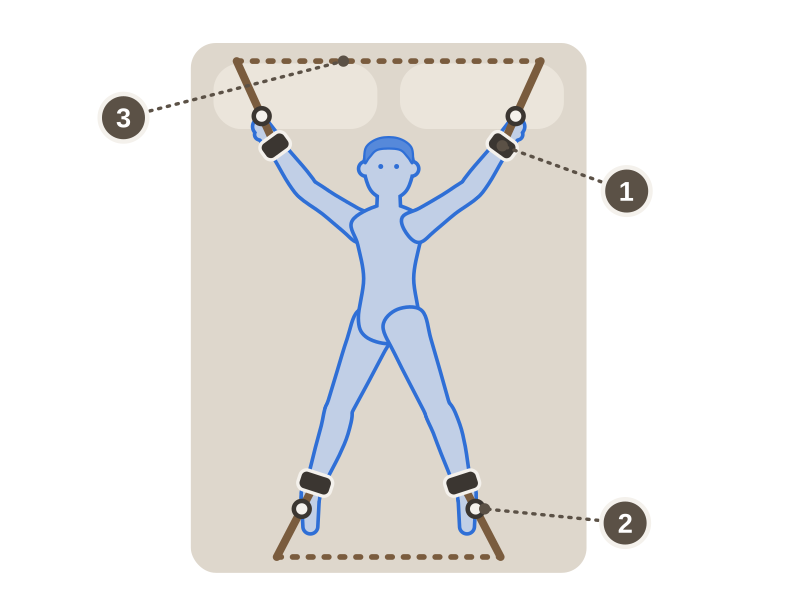
Use cuffs for this rather than rope around the wrists: they’re easier to release and spread the pressure better.
- Put a padded cuff on each wrist, two fingers’ room underneath.
- Clip each cuff to a strap, or to a solid part of the bed frame or headboard. Avoid thin slats, which can snap.
- Leave enough slack that the elbows stay bent and the arms rest comfortably on the pillow. Arms pulled straight and high lose circulation quickly and strain the shoulders.
- Check hands more often in this position, every few minutes, and bring the arms down for a rest within 10 to 15 minutes.
No headboard to clip to? Under-bed straps do the same job on any bed, and add ankle cuffs for a spread-out position.
4. Ankles apart with a spreader bar
A spreader bar is a rigid bar with a cuff at each end that holds the ankles apart: no knots needed.
- Have your partner lie on their back on the bed first. Never use a spreader bar standing up: it’s very easy to fall.
- Start the bar at a narrow setting and fasten the padded cuffs around each ankle, two fingers’ room underneath.
- Widen it a notch at a time only if it’s comfortable. If the hips, groin or knees ache, it’s too wide.
- Use quick-release clips between cuff and bar, and keep it to short sessions.
Rope bondage for beginners
If cuffs feel good and you’d both like to try rope, a few habits make rope bondage for beginners much safer:
- Start on the ground, with simple ties. Single columns on wrists or ankles, then a simple decorative harness over clothes. Nothing that lifts, and nothing behind the back until you’ve had some practice.
- Learn one tie at a time. Practice until you can tie it smoothly and untie it quickly, then use it on a partner.
- Take a class if you can. Many cities have rope classes or workshops, and an experienced teacher can show you how tension should feel. Our guide on how to be a rigger covers learning to tie, and how to be a rope bottom covers being tied.
- Talk throughout. Ask “how are your hands?” often, and agree that the person tied speaks up early about any tingle. Many people who love being tied call themselves a rope bunny; good communication is what keeps them coming back.
- Keep time short. 10 to 15 minutes for first rope scenes, then untie and talk about how it felt.
Positions to tie someone in
The best positions keep breathing easy and joints relaxed. Lying on the back with wrists in front (or loosely above the head) is the easiest; spread out to the corners, keep elbows and knees slightly bent; sitting or kneeling on something soft, wrists in front, is great for teasing face to face. Wrists behind the back is harder on the shoulders, so keep it short. Our guide to bondage positions covers more, and how to keep each one safe.
How to untie quickly
Practice the release before the scene, not during an emergency:
- Bows come undone with one pull of the loose end.
- Cuffs with quick-release clips unclip in a second. Buckles and Velcro are quick too; locks need the key right next to you.
- Rope can usually be untied by undoing the lock and unwinding the wraps. If it’s slow, tight, or your partner is uncomfortable, cut it: slide the blunt blade of the shears under the wraps, away from the skin, and cut. Rope is cheap; nerves aren’t.
- Undo the most restrictive tie first, then help your partner move slowly. Arms that have been raised or held still can feel weak or stiff for a minute.
Stop if…
- Hands or feet go numb, tingly, cold, pale or blue.
- There’s shooting or electric pain down an arm, or pain in a joint.
- Your partner uses the safeword or the non-verbal signal, or goes quiet or unresponsive.
- They feel panicky, dizzy, faint or short of breath. Untie first, talk second.
- A restraint seems to be tightening by itself.
If numbness or weakness in a hand hasn’t gone within an hour or so, or it gets worse, see a doctor.
Aftercare
Untie slowly, then rub the wrists and ankles to bring the warmth back and look for marks. Light rope marks usually fade within hours. Being restrained can leave people floaty, emotional or a little shaky, so make time for aftercare: water, a blanket, a cuddle, and a chat about what you both liked. Check in the next day too.
Ready for more? Our 25 bondage ideas and BDSM games give you things to do once your partner is tied, our overview of the types of bondage explains the options, and the list of kinks is good for finding what to pair restraint with.
Try it together
Frequently asked questions
What's the safest way to tie someone up?
Padded cuffs, either clipped together or attached to under-bed straps. They spread pressure over a wide area, need no knots, and come off in seconds. Keep two fingers' room under each cuff, check hands often, and never leave your partner alone while they're restrained.
What can I use to tie someone up at home?
A wide, soft scarf or a dressing-gown belt tied loosely in a bow works for a first try. Avoid zip ties, thin cord, cable, metal handcuffs without a safety release, and anything that tightens when pulled. Nothing ever goes around the neck.
How tight should you tie someone up?
Snug enough to hold, loose enough to slide two fingers underneath. The person tied should be able to move their fingers and feel everything normally. If their hands go cold, pale, blue, tingly or numb, release them straight away.
What kind of rope is best for beginners?
Soft rope about 6 to 8mm thick: cotton or synthetic rope is easy to wash and gentle on skin, while jute and hemp are the traditional choices for shibari. Avoid thin, slippery or scratchy rope like hardware-store nylon or paracord. Our shibari rope picks list good starter options.
How long can you keep someone tied up?
Keep first sessions short, around 10 to 15 minutes, and check hands and feet every few minutes. Even comfortable positions get stiff. Change position or untie at least every 20 to 30 minutes, and sooner if anything aches or tingles.