 Kinky Thinking
A spreader bar is a rigid bar, usually metal or wood, with a cuff at each end. Buckled to the ankles, it holds the legs apart. Some are used on the wrists, or on wrists and ankles together. The person in it can still move, but they can’t close their legs, which makes them feel open, exposed and a bit helpless, in a way many people find very exciting.
It’s one of the easiest kinds of bondage to try, because it takes no rope skills. If you’re new to restraint in general, our types of bondage overview shows where it fits.
How it’s used
Spreader bars are mostly used in bed:
- Lying on the back, ankles in the bar, for a feeling of being completely open to a partner’s touch or mouth.
- Lying face down, for a more vulnerable, on-display feel, often combined with spanking.
- Kneeling on something soft, for a short time only.
- Clipped to under-bed restraints or wrist cuffs, so the whole body is held in place.
Many couples add a blindfold. Taking away sight while the legs are held open makes the feeling much stronger. See sensory deprivation for how to do that safely.
What to look for when buying one
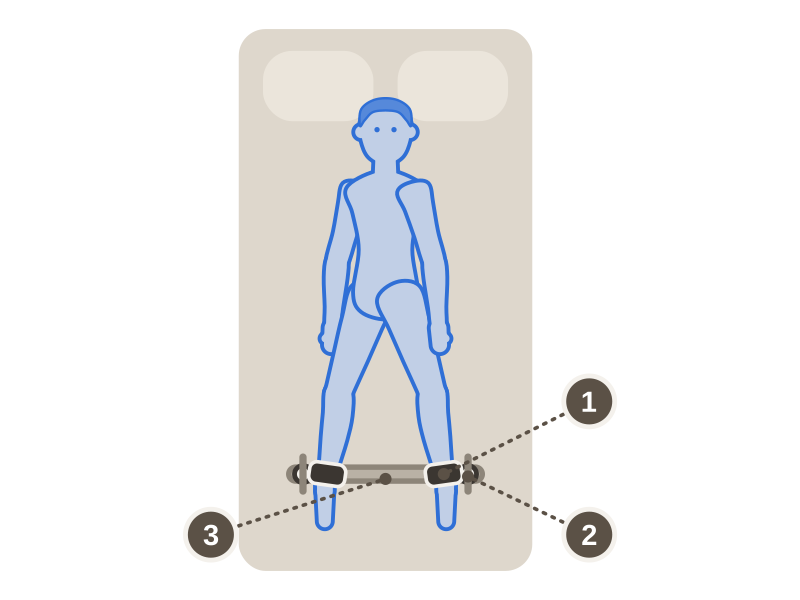
- An adjustable length, so you can start narrow and widen it a notch at a time.
- Padded cuffs, fabric or lined leather rather than bare metal or hard plastic.
- Quick-release clips between the cuffs and the bar, so you can unclip in seconds without undoing buckles.
- Cuffs that buckle or Velcro, not ones that only lock with a key. If you do use locks, keep the key in the room.
- Or start with a kit. If you have no restraints yet, a starter bondage kit gets you cuffs and a blindfold first; add a bar once you know you like being held open.
- No neck attachment. Some bars come with a collar link. Leave it off: anything that pulls on the neck can restrict breathing.
Safety basics
- Agree it first. What’s happening, how long for, a safeword, and a non-verbal signal if the person in the bar may not be able to speak. Our negotiation checklist helps.
- Stay low. No standing, walking or getting off the bed in it. A fall with your legs locked apart can mean a bad injury.
- Check the cuffs. You should be able to slide two fingers under each one. Check hands and feet for cold, tingling, numbness or color change every few minutes.
- Keep it comfortable. Too wide strains the hips, groin and knees. Ease off at the first ache.
- Never leave them alone, not even for a moment.
- Keep safety scissors and any keys within arm’s reach.
Stop if…
- There’s numbness, tingling, cold, or pale or blue-ish skin in the hands or feet.
- There’s pain in a hip, knee or the groin rather than a stretch.
- The person in the bar panics, goes quiet, or uses the safeword or signal. Unclip first, talk second.
Afterwards
Unclip, help your partner stretch out slowly, and give them a minute before they stand: legs can be stiff or shaky after being held in one position. Then move on to aftercare, whatever that looks like for you two.
Looking for more ways to use restraint? Try our bondage positions, bondage ideas, or browse the list of kinks for the rest of the bondage family.
Try it together
Frequently asked questions
What is a spreader bar used for?
It holds a partner's ankles or wrists a set distance apart so they can't close their legs or bring their hands together. That gives the person in it a strong feeling of being open and on display, and gives their partner easy access for touching, teasing or oral sex.
Is a spreader bar safe for beginners?
Yes, if you keep it simple: lying down on a bed, a comfortable width, padded cuffs, short sessions and regular check-ins. The main risks are falls, strained hips or knees from too wide a stance, and cuffs that are too tight. Avoid standing positions and anything that attaches to the neck.
How wide should a spreader bar be?
Comfortable for the person wearing it. An adjustable bar lets you start narrow and widen it a notch at a time. If the hips, groin or knees ache, it's too wide. Flexibility varies a lot from person to person, so go by how it feels, not by the bar's maximum setting.
Can you use a spreader bar on your wrists?
Yes, many are sold for wrists and ankles. Keep the arms below shoulder height and don't leave them up for long, since raised arms lose circulation faster. Check hands often for cold, tingling or numbness.
How long can someone stay in a spreader bar?
Start with a few minutes and check in often. Even comfortable positions get stiff, so change position or take it off at least every 15 to 20 minutes. Stop straight away for numbness, tingling, cold or pale skin, or joint pain.