 Kinky Thinking
On this page
Spanking means striking a partner’s body, usually the buttocks, with a hand or an implement, as part of sex or a scene. It’s one of the most common kinks there is: in the national survey data we break down, 28.4% of U.S. adults found spanking appealing, and 31.7% had actually tried it. It’s also the most common entry point to impact play more broadly.
It can be playful and light, a firm swat during sex, or a slower, more intense scene. All of those are valid; what matters is that you’ve agreed which one you’re doing.
Why people love it
- The sensation. A sharp sting, a deep thud, the warmth that builds afterward. Many people find it intensely arousing in its own right, and it gets blood flowing to the area.
- The power dynamic. Being put over someone’s knee, or doing the putting, is a clear and simple form of dominance and submission.
- Roleplay and “discipline.” For some, spanking is part of a scenario with rules and consequences, which overlaps with bratting.
- The endorphin rush. Pain at the right intensity can bring on a floaty, relaxed feeling afterward, which for some people becomes subspace.
Where to spank, and where not to
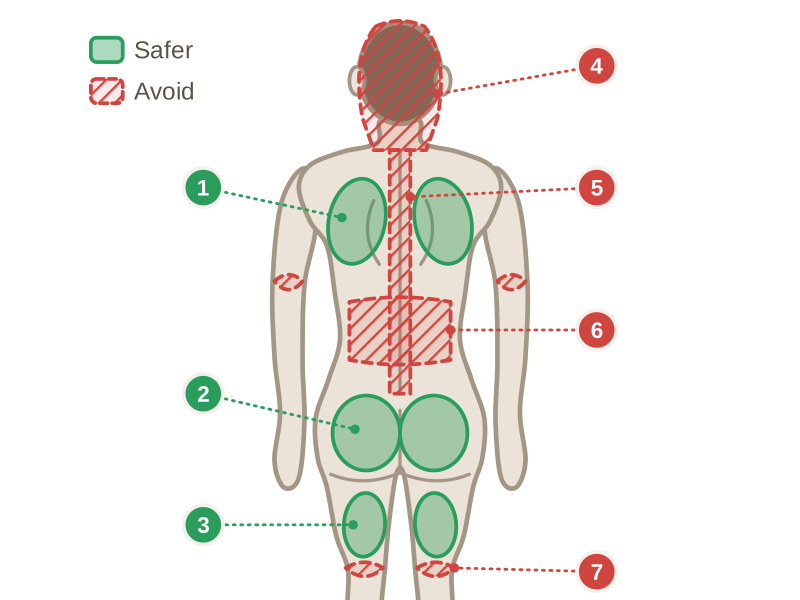
Safe zones:
- The fleshy, lower part of the buttocks (often called the “sit spot”).
- The upper, outer thighs.
Avoid:
- The lower back and kidneys.
- The tailbone and spine.
- Hips, knees, and other joints, and the backs of the knees.
- Anywhere bony, and the genitals unless you’ve specifically discussed it and are being very gentle.
How to start
- Talk first. Agree how intense you want it, whether marks are okay, and what the scene is: playful, sexy, or “punishment” roleplay. Our yes/no/maybe list includes spanking and impact items.
- Agree a way to stop. A safeword, or the common traffic-light system: green for keep going, yellow for slow down, red for stop.
- Warm up. Start with rubbing and light pats, then build gradually. Warmed-up skin and muscle handle more, and the build-up is half the fun.
- Use a cupped or slightly curved hand for a louder sound and less sting, or a flat hand for more sting. Keep your wrist loose.
- Vary the rhythm and placement. Alternate sides, mix spanks with touching, and pause to check in.
- Watch and listen. Breathing, sounds, and body language tell you a lot. Ask “harder or softer?” out loud; most people appreciate it.
Common positions
Our guide to spanking positions covers eight, with diagrams. The main ones:
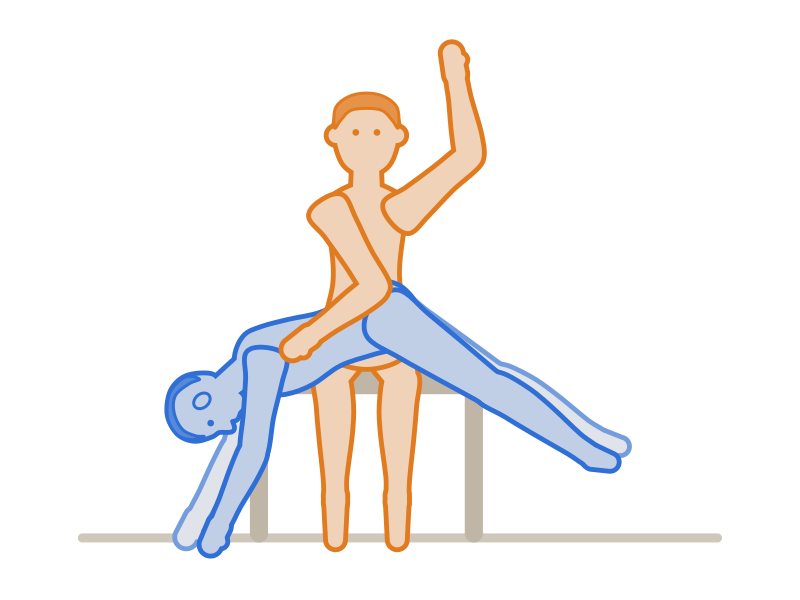
- Over the knee (OTK): the classic. One partner lies across the other’s lap. Intimate, controlled, and easy to check in.
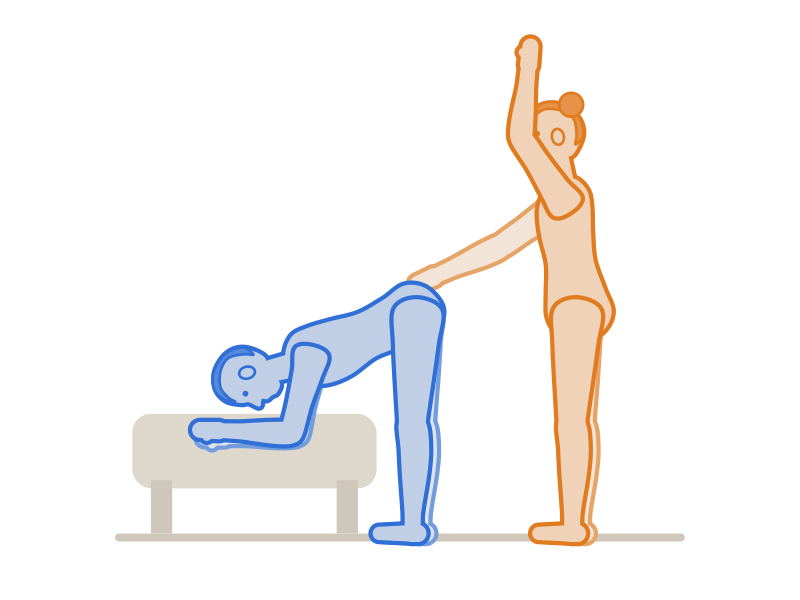
- Bent over the bed, a chair, or the arm of a sofa: gives the spanker a bigger swing, so it suits more intense play.
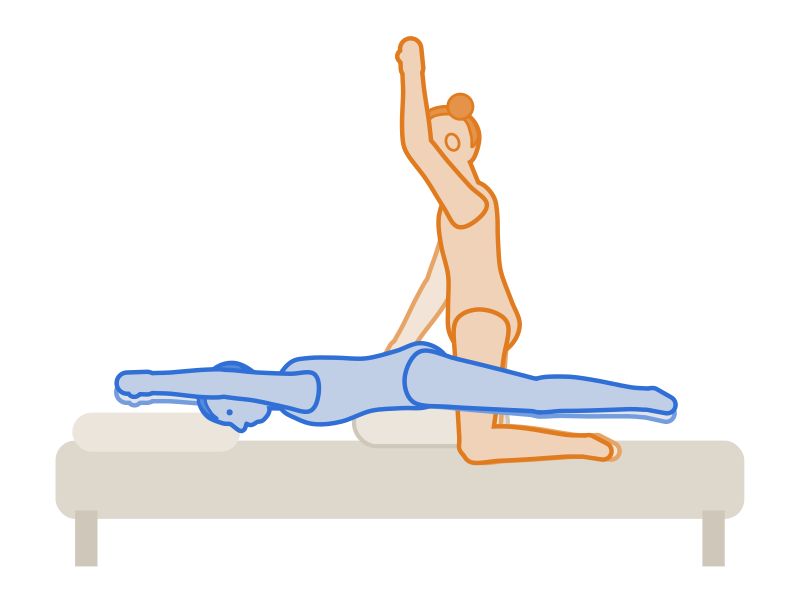
- Lying face-down with a pillow under the hips: comfortable for longer scenes.
- During sex, from behind: quick, playful swats that don’t need any setup.
Hands, paddles, and other implements
A hand is the best place to start: you can feel exactly how hard you’re hitting, and it’s easy to stay in control. Once you know what your partner enjoys, implements add variety:
- Paddles spread impact over a wider area for a deep thud or broad sting. See our picks for the best spanking paddles.
- Floggers feel more diffuse, from soft thud to sting depending on the material.
- Crops and canes concentrate force on a small area and can mark or injure quickly. Leave them until you’re experienced.
Avoid improvised household items like hairbrushes and belts until you’ve practised: they’re harder to control than they look, and belt buckles in particular can cause injuries.
Marks and aftercare
Redness that fades within a few hours is normal. Bruising or lasting marks are fine only if you’ve both agreed to them in advance. Some people love wearing marks, and others need to avoid anything visible. Broken skin means you’ve gone too far: stop, clean it, and talk about it afterward.
Afterward, aftercare might mean cuddling, a cool cloth or soothing lotion on the skin, water, and some reassurance, especially if the scene was intense or emotional. A check-in the next day helps too.
If you bruise very easily, or take medication that affects bleeding, check with a doctor before trying anything beyond light spanking.
Where to go from here
Spanking sits within impact play, the broader category of consensual striking. Our beginner BDSM toy picks include a starter flogger, and if the power exchange side appeals more than the sensation, start with what BDSM is and our guide to dom or sub.
Try it together
Frequently asked questions
How common is a spanking kink?
Very. In a nationally representative U.S. survey, 28.4% of adults found spanking or being spanked during sex appealing, and 31.7% had actually done it, which makes it one of the most commonly tried kinks there is.
Where is it safe to spank?
The fleshy part of the buttocks and the tops of the thighs, where there's plenty of muscle and padding. Avoid the lower back and kidneys, the tailbone and spine, joints, the backs of the knees, and anywhere bony.
Should spanking leave marks?
Only if you've both agreed to it. Redness that fades within hours is normal. Bruising or lasting marks should be negotiated in advance, since some people love them and others need to avoid anything visible. Broken skin means you've gone too far.
Is it better to use a hand or a paddle?
Start with a hand. You can feel how hard you're hitting, and it's easy to control. Paddles and other implements spread or concentrate force in ways that are harder to judge, so they're best added once you know what your partner enjoys.
How do you ask a partner to spank you?
Bring it up outside the bedroom, at a relaxed moment, and be specific: how hard, where, whether you want it playful or more serious. Suggest starting light. A yes/no/maybe list can make the conversation easier if saying it out loud feels awkward.