 Kinky Thinking
On this page
- Chastity for beginners
- The parts of a chastity cage
- Types of chastity device
- Materials
- How to measure for a chastity cage
- Sizing and fit
- Locks and emergency access
- How to use a chastity cage (step by step)
- How long can you wear a chastity cage?
- Sleeping in a chastity cage
- Warning signs: take it off immediately
- Cleaning and hygiene
- Everyday life
- Chastity in relationships and keyholder dynamics
- Solo chastity
- Common mistakes
- Where to go from here
- FAQ
A chastity cage is a device worn over the penis that prevents erections and sexual release. Chastity play means wearing one (or a belt), often with a partner, the keyholder, deciding when it comes off. For many people the appeal is psychological: handing a partner control over something intensely personal, and the long, slow build of orgasm denial.
The psychology is covered elsewhere. This guide is about the practical side for the person wearing one: choosing a device, measuring for it, getting the fit right, putting it on, building up wear time, and knowing when to take it off. Most of what goes wrong with chastity comes down to a poor fit or ignoring early warning signs, and both are avoidable. It’s general information, not medical advice: if you have a health condition that affects circulation or skin, or any concern about wearing a device, talk to a doctor first.
Chastity for beginners
If you’re new to chastity, the short version is:
- Talk first, if you’ll be playing with a partner: what appeals to each of you, and what the rules will be (more in chastity in relationships below).
- Choose a forgiving first device: a silicone or resin cage from a seller that offers several ring sizes.
- Measure and get the sizing right before worrying about anything else.
- Start with short wears while you’re awake, and build up slowly.
- Always keep a quick way to get it off, and take it off at the first warning sign.
The rest of this guide covers each step in detail.
The parts of a chastity cage
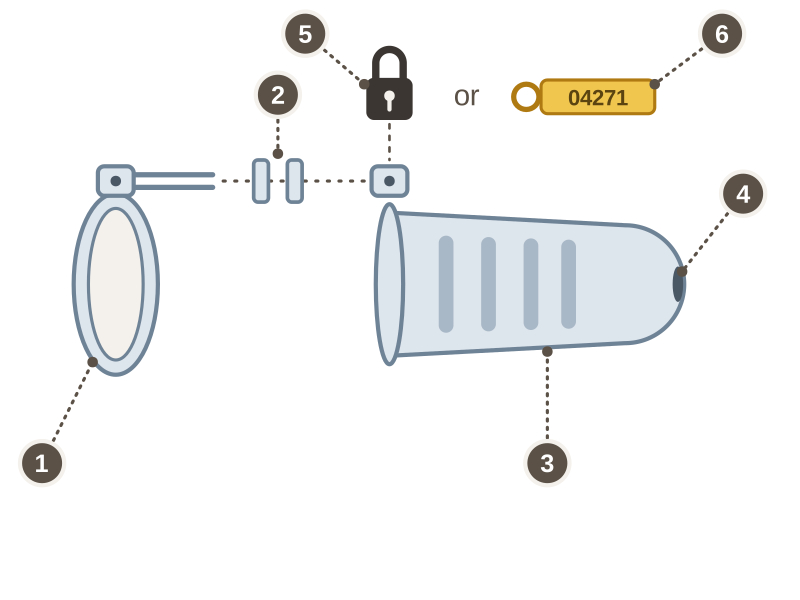
Most cages come in the same few parts, whatever they’re made of:
- The base ring sits behind the testicles and holds everything in place. It’s the part that matters most for comfort and safety, and many devices come with several ring sizes.
- Spacers slide onto the pins between the ring and the cage, and set the gap between them. More spacers mean a bigger gap.
- The cage encloses the penis. Slots or bars let air in and make rinsing easier.
- The opening at the tip is for peeing.
- The lock joins the cage to the ring so the device can’t come apart. Some devices have a lock built in; others use a small padlock.
- A numbered plastic tag can replace the lock. It’s cheap, cuts off in seconds in an emergency, and shows if it’s been removed (more in locks below).
Types of chastity device
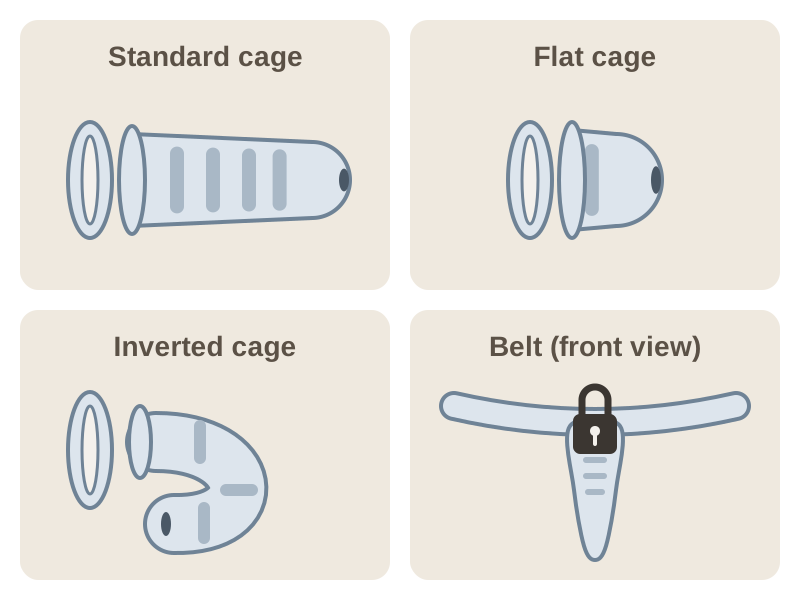
| Type | Best for | First device? |
|---|---|---|
| Standard cage | Most people | Yes |
| Flat cage | Discretion under clothes | As a second device |
| Inverted cage | Discretion, experienced wearers | No |
| Belt | People with a vulva, and some with a penis | Needs careful fitting |
- Standard cages are the most common design for people with a penis. A ring sits behind the testicles and a separate cage encloses the penis, with the two joined by a lock.
- Flat and inverted chastity cages hold the penis close to the body or pointing back. They’re more discreet under clothes, but less forgiving of a poor fit, so they’re better as a second device than a first.
- Belts wrap around the waist with a front shield. They’re the main option for people with a vulva (often searched for as “female chastity cages”) and are also used by some people with a penis. They tend to be more expensive and need more careful fitting. See our chastity belt entry for more.
The ring comes in different styles too:
- Closed rings are one solid piece, and you ease yourself through them. They’re simple and strong.
- Hinged or open rings open up and close around you, which makes them much easier to put on and take off, especially at first.
- Curved or angled rings follow the shape of the body rather than sitting flat. Many people find them more comfortable for longer wear, and less likely to dig in at the top.
Materials
| Material | Feel | Good for |
|---|---|---|
| Medical-grade silicone | Light, soft and flexible | First devices, comfort |
| Resin or plastic | Very light, rigid but smooth | Trying sizes, travel |
| Stainless steel | Heavy, rigid, cool to the touch | Durability, security |
- Medical-grade silicone: soft, flexible, and comfortable, which makes it forgiving while you work out sizing. A common choice for beginners, though more determined wearers can sometimes slip out of them. Use water-based lube with silicone, since silicone lube can damage it.
- Resin or plastic: light, rigid, and often available in many size combinations. Plastic devices don’t trip metal detectors, which matters to some people who travel.
- Metal (usually stainless steel): metal chastity cages are durable, easy to clean, and secure, but heavier and less forgiving if the fit is slightly off.
Whatever you choose, buy from a seller that lists measurements for each part and offers different ring sizes. Cheap one-size-fits-all devices are behind a lot of bad first experiences.
How to measure for a chastity cage
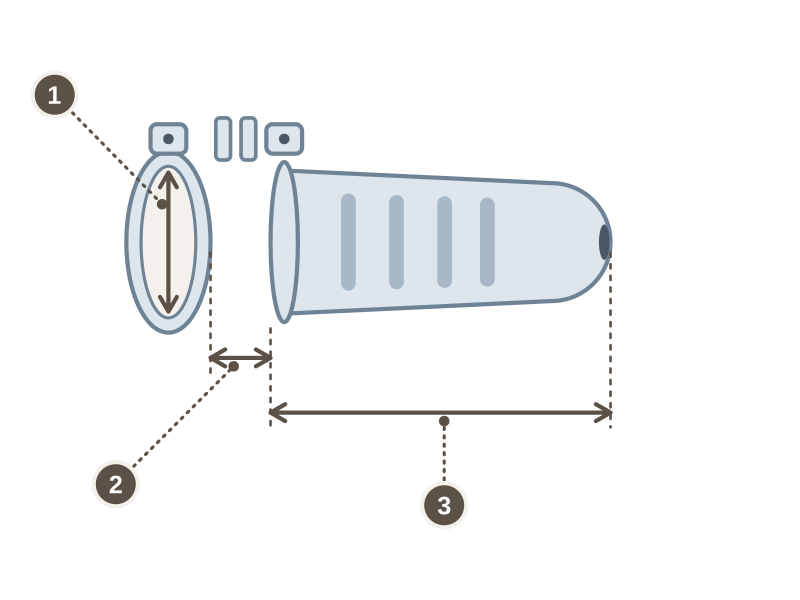
Three numbers decide the fit. Take them when you’re completely soft and cool, for example after a cool shower, not after a hot bath or when you’re turned on. You’ll need a soft tape measure, or a strip of paper or string and a ruler.
- Ring size. Wrap the tape around the base, behind the testicles, where the ring will sit. Keep it snug but not tight. That number is the distance around; divide it by 3.14 to get the inside diameter most sellers list. For example, 15 cm around is a ring of about 48 mm, and 6 inches around is about 1.9 inches.
- The gap. This is set by the spacers, so you don’t measure it on your body. Start in the middle of the range your device allows and adjust from there (see the fit problems table below).
- Cage length. Measure along the top, from the base to the tip, while soft. Choose a cage about the same length or slightly shorter.
Measure on two or three different days and at different times, because size changes with temperature and time of day. Compare your numbers with the seller’s own chart (check whether they list the inside or outside diameter of the ring), and follow their measuring instructions if they differ from these. If you’re between ring sizes, start with the larger one: a ring that’s a little loose is a nuisance, while one that’s too tight is a safety problem.
Sizing and fit
Fit matters more than anything else on this page. Use the manufacturer’s sizing guide, measure when fully soft, and keep these principles in mind:
- The base ring should sit snugly behind the testicles without pinching. Too tight restricts blood flow and causes swelling; too loose lets things pull out and causes chafing. As a rough check, you should be able to slide a fingertip under the ring.
- The cage is usually about the same length as the soft penis or slightly shorter. Too long and things slide around and chafe; much too short and it’s painful.
- The gap between the ring and the cage affects comfort a lot. Many devices come with spacers so you can adjust it.
Expect some trial and error. Many wearers go through a couple of ring sizes or devices before they find one they can wear comfortably for long periods.
Fit problems and how to fix them
| What you notice | Likely cause | What to try |
|---|---|---|
| Swelling, or dark or pale skin behind the ring | Ring too tight | Take it off now. Next time, a larger ring |
| Slipping partly out of the cage | Ring too loose, or gap too big | A smaller ring, fewer spacers, or a curved ring |
| Skin pinched between ring and cage | Gap too small | Add a spacer |
| Rubbing at the tip, or sliding around | Cage too long | A shorter cage |
| Pressure or pain even when soft | Cage too short or too narrow | A longer or wider cage |
| The ring digs in at the top | Flat ring on a curved body | A curved or angled ring |
Any fit problem that comes with the warning signs below means taking the device off first and adjusting later.
Locks and emergency access
- Plastic numbered tags are cheap, can be cut off in seconds in an emergency, and show if they’ve been removed, because each has a unique number. They’re popular for exactly that reason.
- Padlocks or built-in locks are more secure but slower to remove.
- Timer and app-controlled locks keep the key in a box that opens after a set time, or unlock from a phone. Before you rely on one, check exactly how its emergency override works, and never let a battery, an app, or a phone signal be your only way out.
Whatever you use, always have a way to get the device off quickly: a spare key somewhere you can reach, a tag you can cut, or a sealed emergency envelope. Even in dynamics where the keyholder holds the only “real” key, an emergency key for health problems is standard practice, not cheating.
How to use a chastity cage (step by step)
Always follow the instructions that come with your device, since designs differ. For most cage-and-ring devices, the process looks like this:
- Wash the device and yourself, and dry both thoroughly. Check the device for rough edges or cracks.
- Start fully soft and relaxed. Putting a cage on is much easier when you’re cool and calm; a cool shower beforehand helps. A little water-based lube on the ring can make it slide more easily.
- Fit the ring. Ease the testicles through the ring one at a time, then the penis, so the ring sits snugly at the base, behind the testicles. With a hinged ring, open it, place it, and close it instead.
- Slide on the cage, lining the tip up with the opening at the end.
- Join and lock. Connect the cage to the ring with the pins or spacers your device uses, then add the lock or plastic tag.
- Check the fit. Nothing should be pinched or caught, you should be able to slide a fingertip under the ring, and skin color should look normal. Walk around and sit down, then check again after 10 to 15 minutes.
To take it off, unlock it and reverse the steps: cage first, then ease out of the ring. If it won’t come off easily because of swelling, see the warning signs below.
How long can you wear a chastity cage?
There’s no universal limit. It depends on the device, the fit, your body, and your experience, and comfort and the absence of warning signs matter far more than any target. Build wear time up gradually:
- Start with an hour or two while you’re awake and can pay attention to how it feels.
- Then try an evening and an overnight. Night-time erections are normal and often wake people up at first. Discomfort that settles afterward is expected; pain that doesn’t is not.
- Build up gradually, a day at a time, only once shorter periods have been completely comfortable.
People with well-fitted devices do wear them for days or longer, but even experienced wearers take them off regularly to clean, check their skin, and give it a rest. There’s no prize for skipping steps. Treat the first weeks as a fitting process, not a test of willpower, and talk to a doctor if anything worries you.
A sample first two weeks
This is an example pace, not a target. Only move on when the stage before has been completely comfortable, and go back a step if anything feels wrong. Plenty of people never wear one for longer than an evening, and that’s fine.
| When | How long | Move on when |
|---|---|---|
| Days 1–3 | An hour or two, awake and at home | No marks, swelling or rubbing afterward |
| Days 4–7 | An evening, three to six hours | Sitting, walking and peeing all feel normal |
| Week 2 | A first overnight | Any night-time discomfort settled by itself |
| After that | A full day, then a weekend | Still taking it off at least daily to clean and check |
Sleeping in a chastity cage
The first nights are usually the hardest part. Most people with a penis have several erections a night while asleep, whether or not they’re dreaming about anything sexy, and a cage makes them noticeable. Some discomfort that settles once the erection passes is normal. A few things help:
- Empty your bladder before bed. A full bladder can make night-time and morning erections more likely.
- Keep the bedroom cool, and sleep in loose underwear or none.
- If you wake up uncomfortable, a change of position, a glass of water, or a cool cloth often helps it settle.
- Take it off for the night while you’re still getting used to it. That’s sensible, not a failure, and a good rule for a keyholder to set.
Pain that doesn’t settle, numbness, or color changes mean taking it off, whatever the time.
Warning signs: take it off immediately
Remove the device straight away, whatever the agreed rules say, if you notice:
- Color changes: dark red, purple, blue, or very pale skin.
- Numbness, tingling, or coldness.
- Swelling that doesn’t go down quickly.
- Broken skin, blisters, or sores.
- Pain that doesn’t settle, or difficulty urinating.
If the device won’t come off, or swelling or pain continues after removal, get medical help promptly. Emergency department staff have seen chastity devices before, and waiting is much riskier than any embarrassment.
Cleaning and hygiene
- Rinse daily. Most cages can be cleaned while worn: shower with it on, use a mild, unscented soap, and rinse well.
- Dry thoroughly, especially under the ring. Trapped moisture is the main cause of irritation and odor.
- Take it off regularly for a full clean of you and the device, and to check your skin. Agree with your keyholder in advance that hygiene removals are part of the arrangement, not an end to it.
- Clean the device itself when it’s off with warm water and mild soap (or a toy cleaner suitable for its material), rinse, and let it dry completely before putting it back on.
- Watch for rubbing spots and deal with them early. A small adjustment or a different ring size is better than toughing it out.
- Give sore skin a break. Leave the device off until any redness has fully healed, and ask a pharmacist if you’d like a gentle, unscented barrier cream for next time.
Everyday life
- Sitting and sleeping usually take a few days to get used to.
- Clothes: snug, supportive underwear stops the device moving around, and slightly looser trousers keep it discreet.
- Exercise: be careful with activities that put pressure on the groin, especially cycling, and consider taking the device off for them.
- Medical appointments and scans: tell the clinician, and always remove metal devices before an MRI.
- Travel: metal devices will set off metal detectors. Many travelers either use a plastic device or leave it off for the trip.
Chastity in relationships and keyholder dynamics
Most chastity is played with a partner, a girlfriend, boyfriend, wife, husband, or play partner, who becomes the keyholder and decides when the device comes off. It works best when the keyholder genuinely enjoys the role, rather than going along with it as a favor. Bring it up at a calm moment, explain what appeals to you, and let them ask questions; filling in our negotiation checklist together is an easy way to structure the conversation.
Agree the terms before the first lock goes on:
- How long periods last, or what decides when they end.
- How requests for release are made and whether they can be negotiated.
- Check-ins: how often, and in what form.
- A health exception: any health or safety concern means immediate removal, with no penalty and no argument. This works like a safeword for the device.
Our guide to being a keyholder covers the other side of the arrangement, and the BDSM contract template is a good way to write the terms down, since chastity dynamics run over days and weeks rather than a single scene.
Ideas for keyholders
The device does the restricting; the keyholder makes it fun. A few ideas couples enjoy:
- A daily check-in. A quick message about how it feels and whether anything is rubbing keeps you connected and catches problems early.
- Tag photos. With numbered tags, a photo of just the tag’s number shows it hasn’t been swapped since the last check.
- Tease without release. Kissing, touching, and teasing while the key stays put is the heart of orgasm denial. Our Tease & Denial truth or dare pack is built for exactly this.
- Tasks to earn time off. Chores, small services, or obedience tasks turn a release into a reward. Our list of sub tasks has plenty of ideas.
- Hide the key. The keyholder hides it somewhere in the room and gives warmer and colder clues; see our BDSM games for the full version.
- A calendar. Agree release days in advance, or let the keyholder add or remove days as a reward or a tease.
Whatever you play, the health exception always wins.
Solo chastity
Some people wear a cage without a keyholder, for the feeling of it or to build their own discipline. Everything above still applies: measure carefully, build up slowly, and take it off at the first warning sign. If you use a timer lockbox to keep the key out of reach, choose one with a dependable emergency override, and never lock away the only key where you can’t get it in a hurry.
Common mistakes
- Buying on price rather than fit.
- Measuring when warm or aroused, which leads to a ring that’s too tight.
- Going straight to long wear without building up.
- Ignoring early warning signs because of the rules of the game. Health always overrides the dynamic.
- No emergency access. Have a spare key or cuttable lock every time.
- Neglecting hygiene on longer wears.
Where to go from here
If the control side appeals more than the device itself, read our pages on orgasm denial and edging, both of which can be explored without any gear at all, or try our edging games. For the bigger picture of power exchange, see our guides to rules and protocols and being a sub.
Try it together
Frequently asked questions
What is a chastity cage?
A chastity cage is a device worn over the penis that prevents erections and sexual release. A ring sits behind the testicles and a cage encloses the penis, joined by a lock. It's usually worn as part of a dynamic where a partner, the keyholder, decides when it comes off.
What size chastity cage do I need?
Measure when you're completely soft and cool. For the ring, wrap a soft tape or strip of paper around the base, behind the testicles, and divide that number by 3.14 to get the ring's inside diameter. For the cage, measure the soft length along the top and choose a cage the same length or slightly shorter. Measure on a few different days, compare with the seller's own chart, and if you're between ring sizes, start with the larger one.
How long can you wear a chastity cage?
It depends on the device, the fit, and your experience. Beginners should start with an hour or two while awake, then an overnight, and build up from there. People with well-fitted devices do wear them for days or longer, but even then they typically take them off regularly for cleaning and skin checks. Comfort and the absence of warning signs matter more than any target length.
Can you pee while wearing a chastity cage?
Yes. Cages are designed with an opening at the tip for urinating. Many wearers find sitting down is easier and less messy. Rinse and dry afterward to keep the skin healthy; if urinating becomes difficult or painful, take the device off.
Is it normal to wake up uncomfortable in a cage?
Some discomfort from night-time erections is very common, especially in the first few nights, and often wakes people up. Discomfort that settles once the erection subsides is normal. Pain that doesn't settle, numbness, or color changes are not, and mean the device should come off.
What if I can't get the cage off?
Use your emergency key or cut a plastic tag lock straight away; that's what they're for. If swelling stops the device coming off, or you can't release it for any reason, go to an emergency department promptly. Staff have seen this before, and delaying is far riskier than any embarrassment.
Can my girlfriend or partner be my keyholder?
Yes, and most keyholders are partners. It works best when your partner is genuinely interested in the role rather than doing it as a favor, so talk it through first: what appeals to each of you, how long periods might last, and how health checks work. Our keyholder guide is a good thing to read together, and the emergency key rule applies whoever holds the main one.
Should a beginner get a metal or silicone cage?
Many beginners start with a medical-grade silicone or lightweight resin device because they're more forgiving and comfortable while you work out sizing. Stainless steel is durable and easy to clean but heavier and less forgiving of a poor fit. Whatever you choose, fit matters far more than material.