 Kinky Thinking
On this page
A BDSM scene is a single, agreed stretch of kink play with a clear beginning and a clear end. It might be ten minutes of spanking, an evening of bondage, or a roleplay that runs through dinner. What makes it a scene is that everyone agreed to it beforehand, and that it finishes: afterwards, the roles are put down and you’re equals again.
Before: negotiation
Every scene starts with a conversation, calmly and fully clothed. You agree:
- Who leads and who follows. The dom (or top) runs the scene; the sub (or bottom) follows. Some people switch between scenes.
- What’s in and what’s out. Hard limits are never, soft limits are maybe-with-care. Anything that isn’t a clear yes stays out. Our negotiation checklist covers it all in one place.
- A safeword that stops everything, a slow-down word, and a non-verbal signal if anyone will be gagged or tied.
- Aftercare. What each of you needs once it’s over.
During: the arc
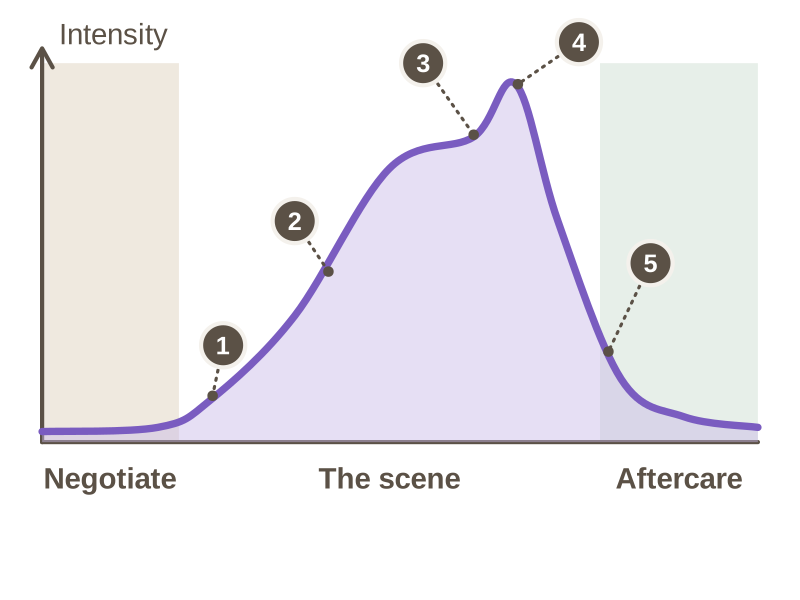
Most scenes have a shape, a bit like a story:
- Warm-up. Ease in: kissing, massage, putting on a blindfold or collar, saying the rules out loud.
- Build. The power shifts. Teasing, light restraint, the first spanks.
- Main event. The thing you planned the scene around.
- Finale. An orgasm, a denial, or just a moment of stillness.
- Wind-down. Release restraints first, then slow everything down.
The person leading keeps checking in throughout, with a word, a look or a hand squeeze. Someone deep in a scene (or in subspace) may not notice warning signs themselves.
If you’d like help with the shape, our free scene planner builds a step-by-step scene from your roles, limits and the flavour you want, with safety notes and aftercare included.
After: aftercare and check-ins
Aftercare is part of the scene, not an extra: water, warmth, closeness, and talking about what you loved and what you’d change. Check in again the next day, too. Feeling low a day or two later, known as sub drop, is common and passes.
Scenes in public and at clubs
A scene “in public” only works discreetly, with nothing strangers could see or hear: indecent exposure laws can apply anywhere the public could see, whether or not anyone looks. If you want an audience, BDSM clubs and play parties are where everyone has opted in. See our guide to voyeurism and exhibitionism for where the line sits, and our list of kinks for ideas to build a scene around.
Try it together
Frequently asked questions
What is a BDSM scene?
A scene is a single, agreed stretch of kink play with a clear start and end. It might be ten minutes of spanking or a whole evening of bondage and roleplay. What makes it a scene is that everyone agreed it in advance, and that it ends: after it, you're back to being equals.
How long does a scene last?
As long as you agree. Many first scenes are 15 to 30 minutes, which is plenty. Longer scenes need more check-ins, more breaks for water, and more aftercare. Restraints in particular shouldn't stay on for long stretches without checks.
What does it mean to 'do a scene' at a club?
At a kink club or play party, 'doing a scene' means playing in the shared space, often on the venue's equipment, where others may watch. You still negotiate first, follow the house rules, and never join or interrupt anyone else's scene without being invited.
What's the difference between a scene and a dynamic?
A scene is one session. A dynamic is the ongoing relationship around it, like a 24/7 dom/sub arrangement with rules that carry on between scenes. Plenty of people only ever do scenes, with no ongoing dynamic at all.
How do you end a scene?
Deliberately. Release any restraints first, slow everything down, then move into aftercare: water, warmth, closeness and a chat about how it went. Some people use a phrase or take off a collar to mark the end. Check in again the next day.